
October 18, 2026, 3:26 p.m.
Pensioners Are Not Welfare Cases, but Creditors and Donors of the State!!!
Let us continue yesterday’s post, “How much does the state steal from the future Romanian pensioner?” — doing the sum this time at the average wage.
In short — yesterday I did the reckoning for the Romanian paid the minimum wage all his life. Today we do it for the one paid the gross average wage in the economy — 9,497 lei, as reported by the National Institute of Statistics for August 2026. And the answer is harsher still: the better you are paid for your work, the more you donate to the state.
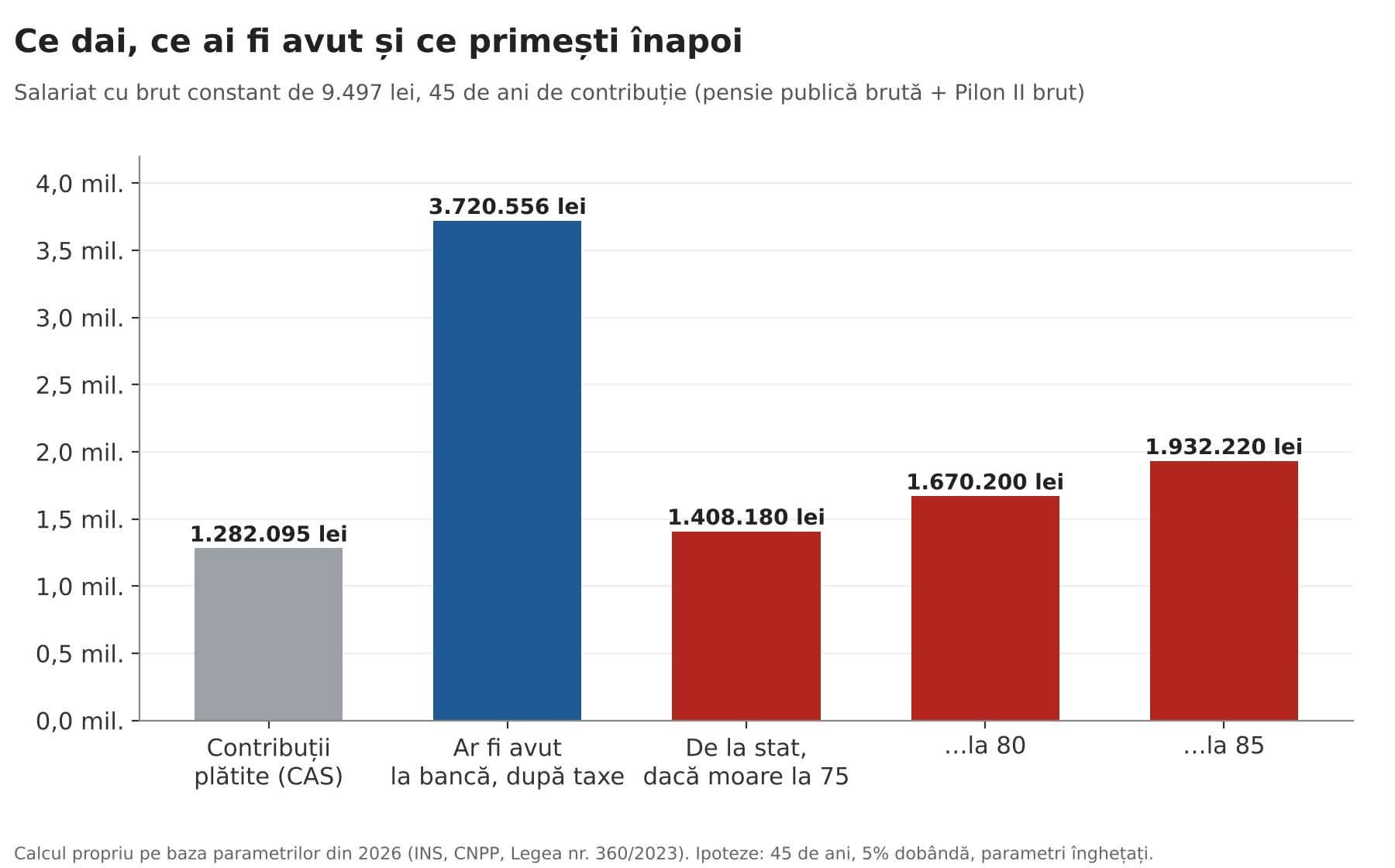
Over 45 years of work our man pays 2,374.25 lei a month into the pension — 1,282,095 lei in all, without a leu of interest. Had he been allowed to put it in the bank every month, at 5% a year, he would have retired with 3,720,556 lei — after the state had already taken its tax on interest and its health contribution!
In exchange the state gives him a pension of 4,367 lei gross (4,107 lei in hand) and a Pillar II of about 884,000 lei. If he dies at 85, he has received 1.93 million in all. If he dies at 75, 1.41 million.
The difference — between 1.79 and 2.31 million lei — stays with the state.
To get his money back he would have to live 119 years and two months. Reckoning the pension he actually receives in hand, 122 years and seven months. And if the state were to give him only the public pension, without Pillar II, 136 years!
It is simple, it is arithmetic. Hence the title: the pensioner is not a welfare case living on the charity of the budget. He is a creditor who lent the state money, without interest, for 45 years — and a donor who leaves it, at the end, everything he does not live to collect.
Below, for the curious, I set out the demonstration at length — with all the figures and all the assumptions in plain sight.
Why pensioners are NOT welfare cases:
More and more often we hear, from the mouths of those who govern and of the “analysts” on duty, that pensions “weigh on the budget”, that pensioners “live off the labour of the active”, that the system “keeps them”. The discourse is not accidental: it prepares the contributor to accept freezes, “corrections” and postponements, as though the pension were an alms and not a debt.
A welfare recipient receives help for which he has not contributed — and the state does well to give it, for that is the purpose of a social state.
The pensioner, by contrast, has paid. He paid month after month, for 45 years, before receiving a single leu. The Constitution does not place the pension under the heading of charity, but under that of rights: Article 47(2) states that citizens have the right to a pension and to the other forms of social insurance provided by law. And Law no. 360/2023 rests the public system on the principle of contributivity — the pension is calculated according to what you have paid.
Therefore the right question is not “how much does the pensioner cost the state?”, but “how much does the state owe the pensioner — and how much of that debt will it never pay?” That is what the figures below answer.
Creditor: the state gives him back, in instalments, exactly what it took — without interest
Of the 2,374.25 lei paid each month, 1,923.14 lei go to the public system (Pillar I) and 451.11 lei to Pillar II [2]. Over 45 years the public part alone adds up to 1,038,497 lei. That is the “loan” the man made to the state.
The state repays him in instalments of 4,367 lei gross a month. In nominal terms — without a leu of interest for the 45 years in which it used his money — only at the 238th pension, that is, at 84 years and 10 months. If we reckon the pension he actually collects, after the state takes back from it the health contribution and the tax (some 260 lei a month), recovery comes at the 253rd pension: 86 years and one month.
Now set beside that the Eurostat data for 2024: a Romanian man of 65 has, on average, another 15.1 years to live; a woman, 19.1. That is, the man dies, statistically, at about 80, the woman at about 84. So the ordinary Romanian on the average wage does not live to see back even the nominal sum he gave — let alone the interest!
Any bank in the world that returned a deposit after 45 years, without interest, in instalments the depositor does not live to collect, would be shut down by the authorities the same day. The state does it and calls it “solidarity”.
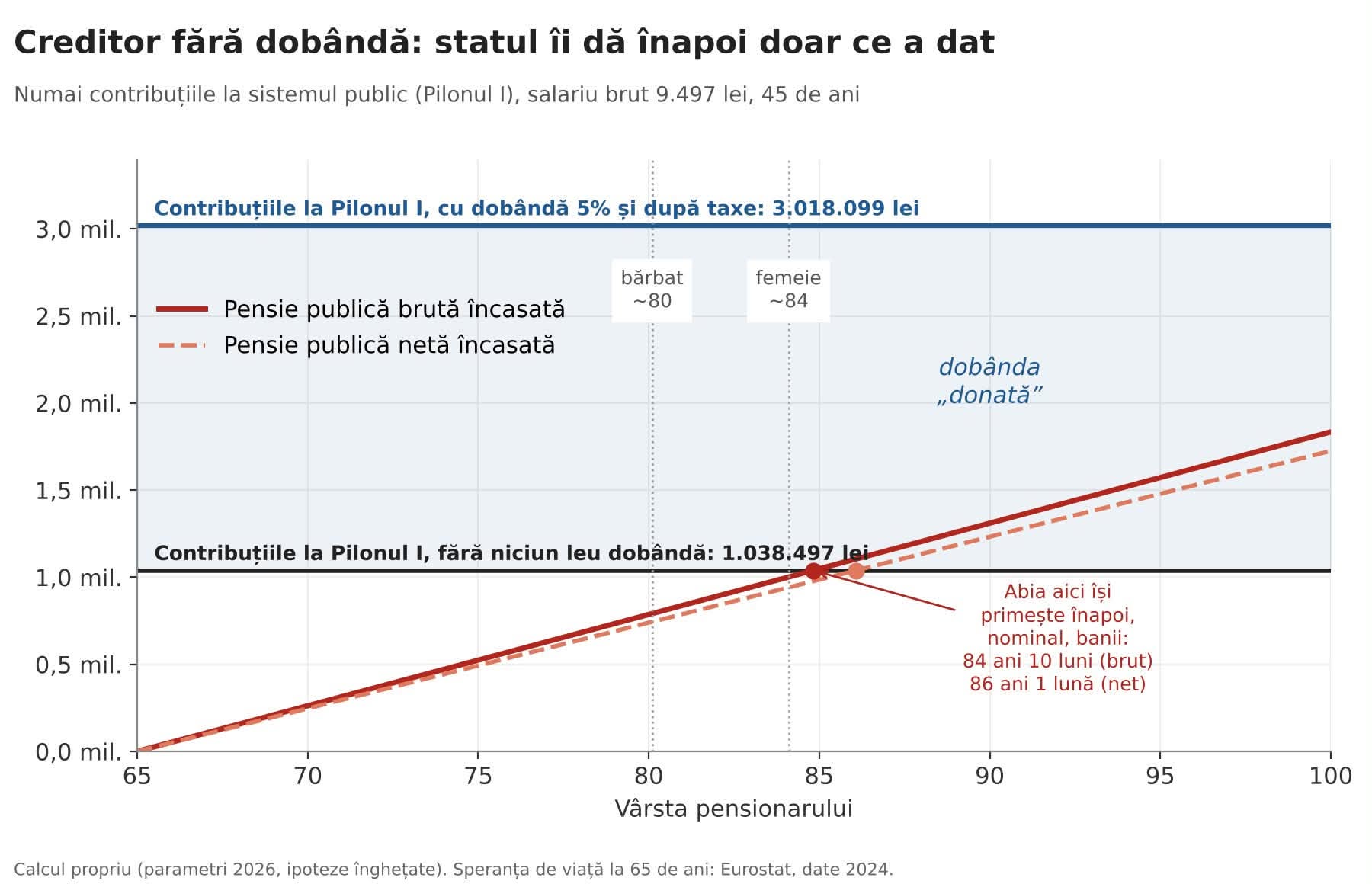
(Chart 2. A creditor without interest: when the man gets back, in nominal terms, the money paid into Pillar I)
Donor: everything his money would have produced stays with the state
The same 1,038,497 lei from Pillar I, placed in a bank at 5% a year, after tax and the health contribution, would have become 3,018,099 lei. The difference of nearly two million lei is the interest the man donates to the state — without having signed any deed of gift and without ever having been asked.
And if we reckon the pension in hand rather than gross, the donation rises to 2,343,543 lei (at 75), 2,097,107 lei (at 80) and 1,850,671 lei (at 85).
By the month: the bank capital would have allowed him to spend 15,502 lei a month for 20 years, without a leu of interest after retirement. The state gives him, with Pillar II spread over the same period, 8,051 lei. The difference: 7,451 lei every month — almost two further public pensions, which he will never see.
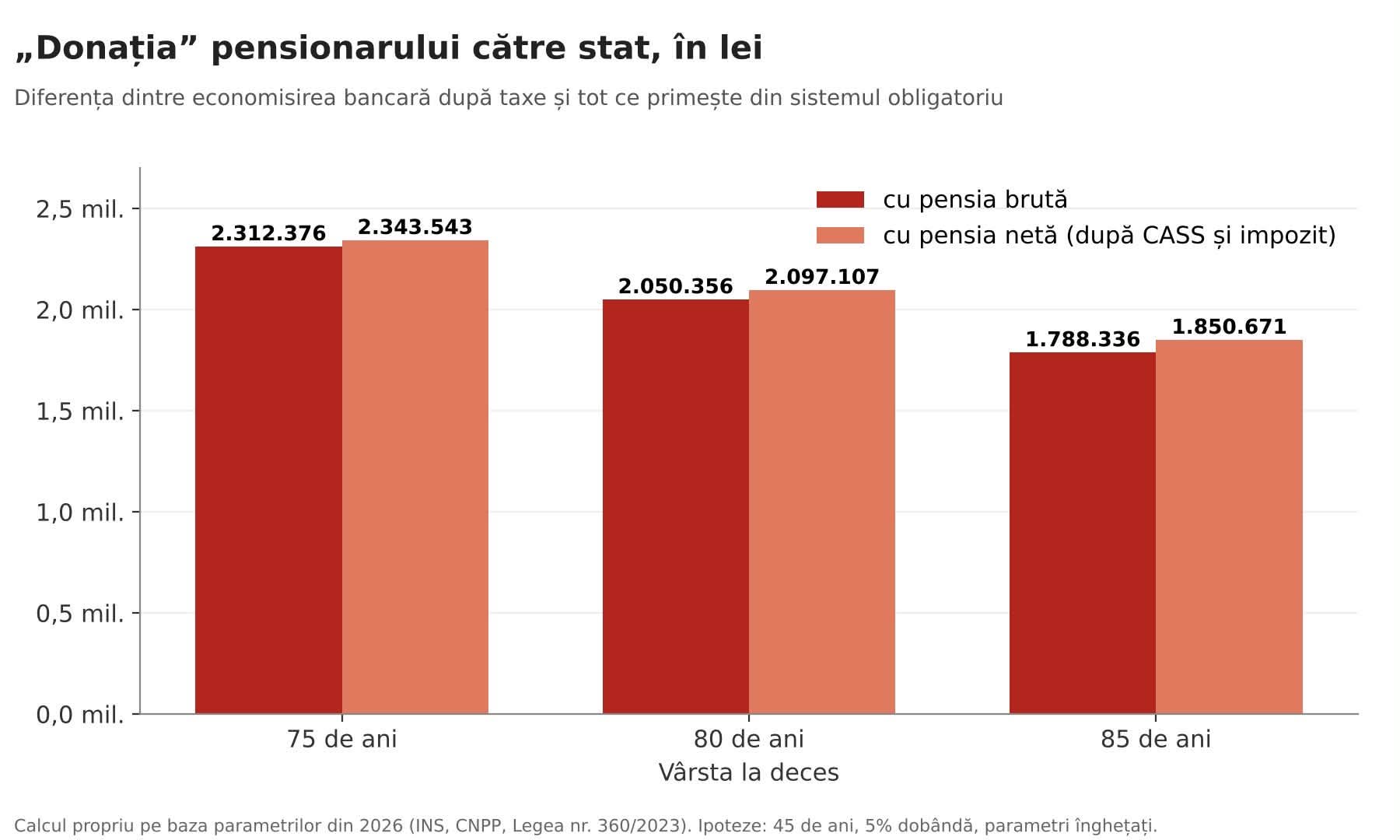
(Chart 3. The pensioner’s “donation” to the state, by age at death)
At what age does the Romanian pensioner get his money back? At one nobody reaches!
The reckoning is a single one: from the bank capital of 3,720,556 lei we subtract the 884,140 lei of Pillar II and divide the rest by the monthly pension of 4,367 lei. The result is 649.5 months. Equality comes at the 650th pension — after 54 years and two months of retirement, that is, at 119 years and two months.
With the net pension of 4,107.27 lei, equality comes at the 691st pension — 122 years and seven months. The oldest person ever attested, the Frenchwoman Jeanne Calment, died at 122 years and five months. Our pensioner on the average wage would have to outlive her — and even then he would only draw level with the bank!
And if we set Pillar II aside and compare the public pension alone with saving the whole sum, the threshold is passed at the 852nd pension, at about 136 years
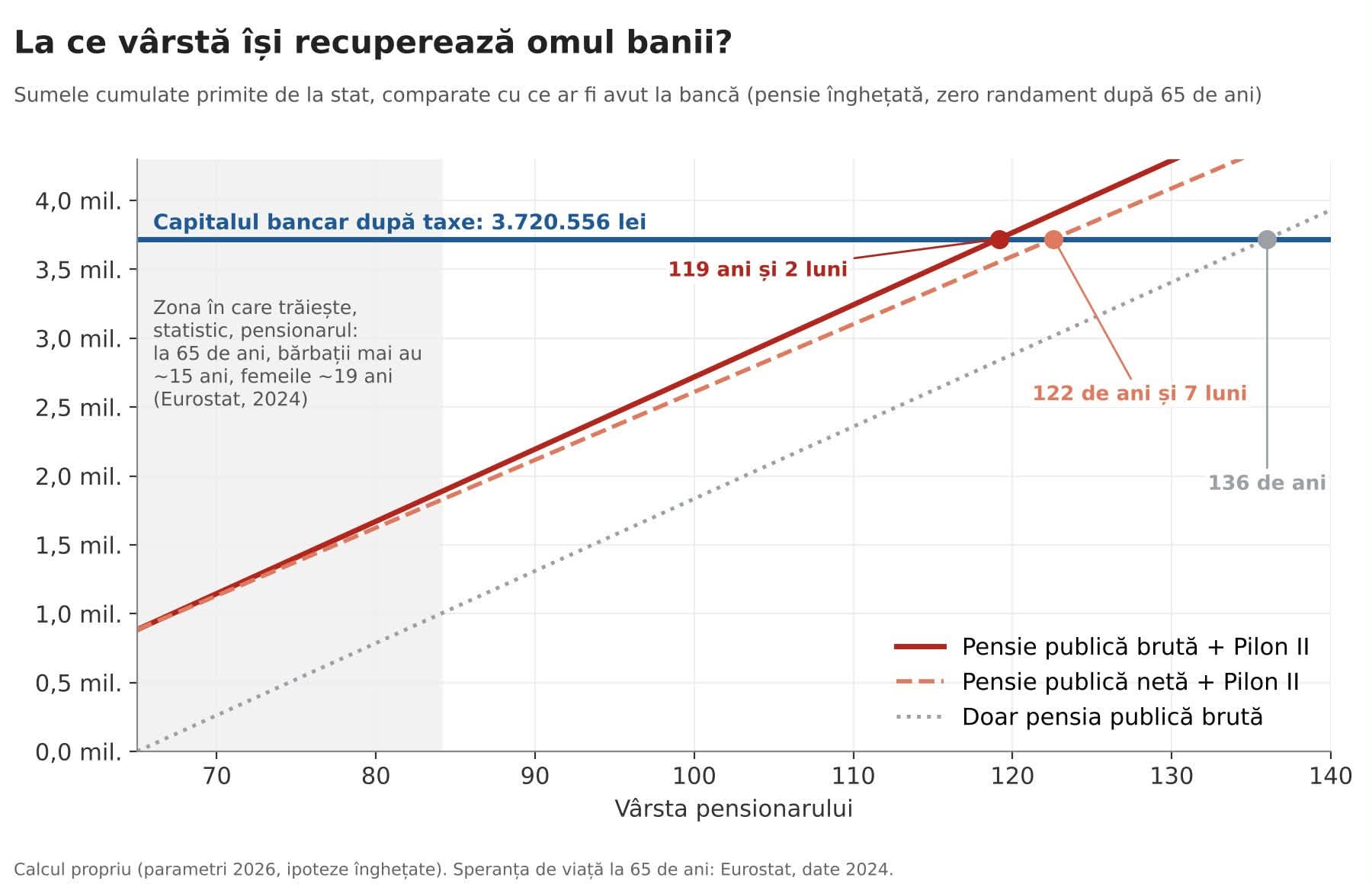
(Chart 4. The age at which the sums received from the state equal the bank savings)
The more you earn, the more you donate
Set beside yesterday’s calculation, the result speaks for itself:
The contributions rise 2.3-fold; the donation rises 2.4 to 2.8-fold; and the age at which you recover your money climbs by 14 years. In other words, the man who works more and is better paid is also the most “generous” towards the state.
Let us be honest to the end: part of the explanation lies in the pension formula itself. The stability points — 16.25 for 45 years — are the same for everyone, so they weigh more on a small pension than on a large one; and the correction factor for participation in Pillar II reduces the score. This means that part of the average earner’s “donation” goes, through the system, to his colleague on a small wage. That would even be a fine thing — if the state said so openly and did not use precisely this solidarity as an argument that pensioners are “a burden”.
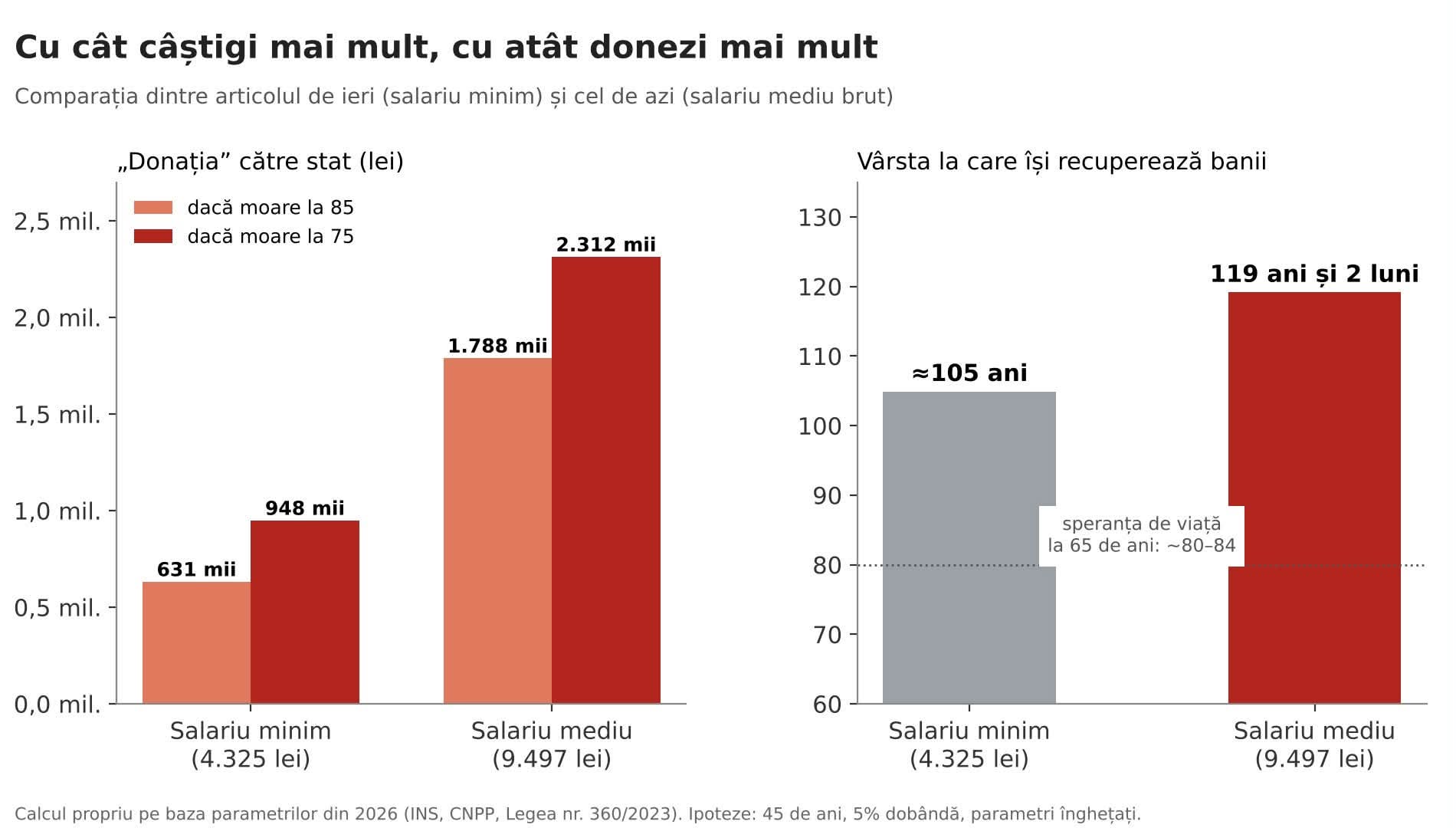
(Chart 5. The minimum wage against the average wage: the donation and the age of recovery)
An honest correction to yesterday’s article — and what still stands
Yesterday I wrote that if the man dies in the first year of his pension the state “keeps” everything he paid. I must make it precise: the money in Pillar II is not kept by the state — it is a personal asset and passes to the heirs, under the law. In today’s case that means the roughly 884,000 lei accumulated from 243,598 lei of contributions.
What stands, however — and it is grave enough — is all the rest. The 1,038,497 lei paid into Pillar I do not form an account transmissible by inheritance. If the man dies after exactly one year of pension, he has collected 52,404 lei gross. The difference of 986,093 lei does not reach his children; it stays in the system. The law provides, under certain conditions, a survivor’s pension and a death benefit — but these are not a restitution; they too are a “protection” granted on the state’s own terms and in its own measure.
The assumptions, in plain sight:
- a constant gross wage of 9,497 lei (National Institute of Statistics, August 2026), 45 contributory years, between 20 and 65, without interruption;
- a social insurance contribution of 25%, of which 4.75 percentage points to Pillar II and 20.25 percentage points to the public system;
- a constant effective gross annual interest of 5%, applied monthly (≈ 0.4074% a month), deposits at the end of each month, without bank charges;
- a 10% tax on interest, withheld at each crediting (290,650 lei in all); the health contribution on interest according to the 2026 thresholds — 24,300, 48,600 and 97,200 lei, with obligations of 2,430, 4,860 and 9,720 lei — appearing from years 15, 24 and 36 respectively (177,390 lei in all);
- the pension: 9,497 ÷ 9,192 × 0.81 ≈ 0.8369 points a year × 45 years = 37.66 points, plus 16.25 stability points = 53.91 points × 81 lei = 4,367 lei gross, rounded up in the pensioner’s favour;
- the net pension: a health contribution of 136.70 lei and a tax of 123.03 lei, giving 4,107.27 lei;
- Pillar II: 451.11 lei a month at 5% a year, giving 884,140 lei gross, before taxes and charges;
- after 65: the pension stays frozen, and neither the bank capital nor Pillar II earns any further return.
I know, the objection comes at once: pensions are indexed, interest rates vary, inflation eats into everything. So it is — and anyone who wishes may redo the calculation with other assumptions; I have left them all in plain sight precisely for that. But indexation is not a gift: it is the attempt, most often partial, to preserve for the pensioner the purchasing power of money the state used free of charge for 45 years. And the invalidity and survivor protections, which I have not valued in money, are real, and I honestly enter them in the state’s column. It remains for the state to show us, in its turn, the figures.
(And, as yesterday, the calculation takes no account of the “social character” of the system — the fact that today’s contributions pay today’s pensions. We compare only what the Romanian citizen has given and what he receives.)
*
The conclusion — this time without the gloves of “political correctness”
A Romanian paid all his life the gross average wage of 9,497 lei, allowed to put his contribution in a bank at 5% a year, would have retired after 45 years with 3.72 million lei in his account. Clean — after the state had already taken its tax on interest and its health contribution!
The compulsory system — the public pension plus Pillar II, both reckoned gross, that is, in the version most favourable to the state — gives him between 1.79 and 2.31 million lei less, according to whether he dies at 85 or at 75. That is the donation. Nobody asked him whether he wished to make it.
To see his money back he would have to live to 119 years and two months. And if we reckon the pension as he actually receives it, after the state takes back from it the health contribution and the tax, only at the 691st pension — at 122 years and seven months. More than any attested human being has ever lived on this earth. These are nominal thresholds, tied to the frozen pension and to money held without interest after 65; change the assumptions and the age shifts. But I am waiting to be shown a realistic scenario in which the pensioner does get his money back, and at what age…
*
The Romanian pensioner is not, therefore, a welfare case who “lives off the state budget”. He is a creditor who lent the state his money, without interest, for 45 years, and whom the state pays in instalments that, statistically, he does not live to collect. And he is a donor who leaves the state, at the end, between 1.8 and 2.3 million lei — without a deed of gift, without a notary and without being asked.
And whoever calls him “a burden” either does not know arithmetic or knows it all too well… and is an utter scoundrel!
A clean social state, this Romania of ours! Article 1(3) of the Constitution says that Romania is a state governed by the rule of law, democratic and social. In the Second Republic, “social” has come to mean that the man gives, the state takes — and at the end it is the man who is made to feel he is in debt.
The citizen has the right to see these figures in black and white and to be told transparently what the compulsory contribution costs him and what, in fact, he receives in exchange!!! Let him receive at least that much in return for the “donation” he makes to the Romanian state!
See the post on FacebookThe permanent address of the original post, as published on the author’s page.
Comments
Have your say. Comments appear once approved.